Verstappen's Interlagos recovery hides a McLaren pace gap Red Bull can't explain
Max Verstappen went from 21st to second at Interlagos, but Red Bull's team boss admitted McLaren were a bit faster in Brazil.
From 21st to second, with a faster McLaren up the road
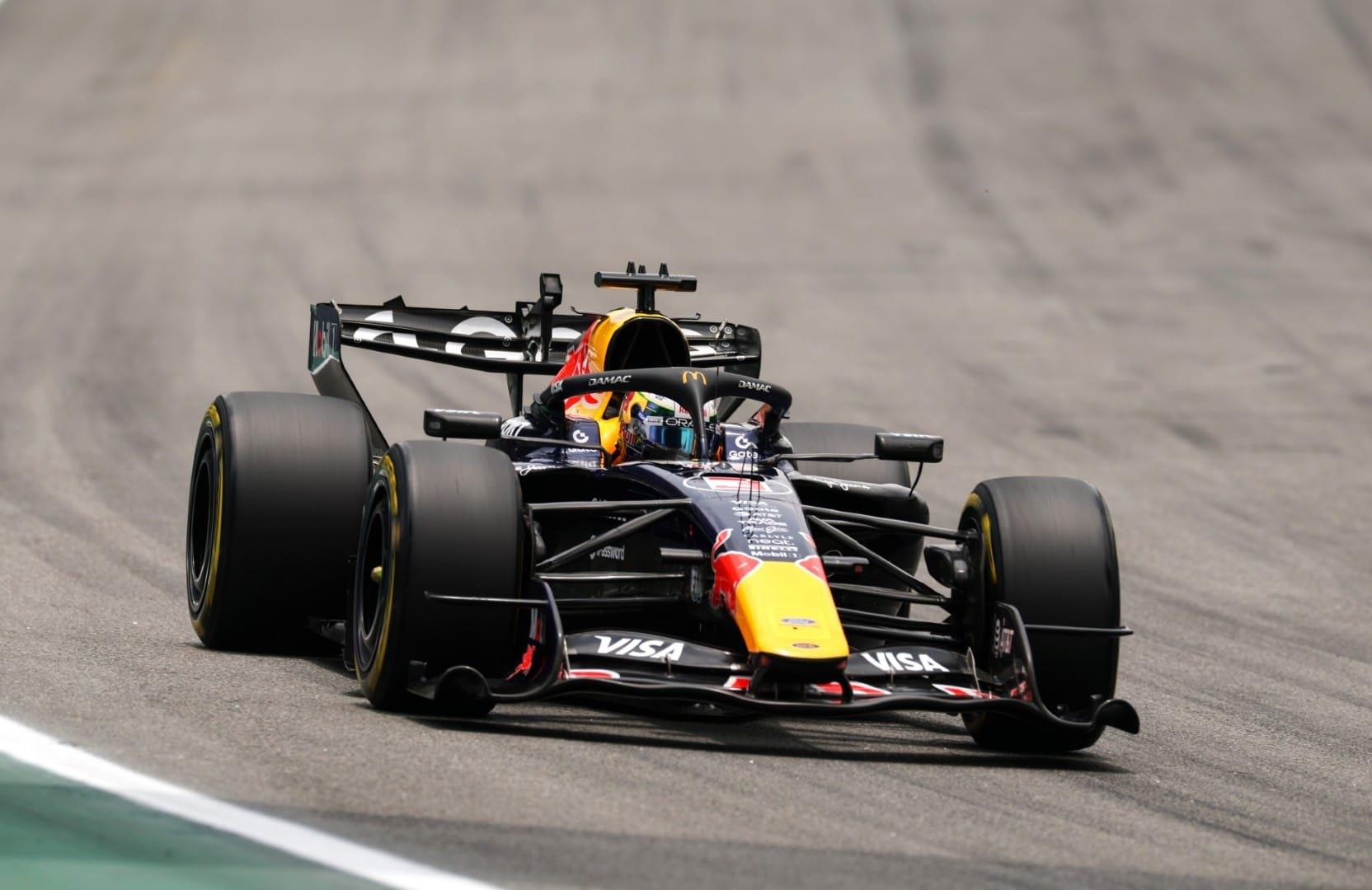
Max Verstappen warned that passing at Interlagos would be harder, then went from 21st to second in the São Paulo Grand Prix. The warning came after qualifying. He felt these cars make overtaking at this circuit tougher than he had found it before. An engine penalty had put him near the back, and his start on the uphill grid didn't go to plan either. Motorsport.com reported that he took the blame for that himself.
He has form here. In 2024 he won from 17th on the grid, and last year he climbed from the pit lane to third, so this was the third year in a row that Interlagos produced a Verstappen comeback. This one turned on a short burst early in the race: 14 places in five laps, by the count of his team boss, Mekies. Those were the laps that turned a salvage job into a result.
Mekies said no simulation in the world would have predicted a climb like that, and the sport's own website carried his account of how Verstappen outperformed Red Bull's own tools. He also called the weekend frustrating, because the pace had looked good on Friday, on Saturday morning and in the opening part of qualifying.
Then he admitted the thing Red Bull should actually worry about. McLaren, in his words, were a bit faster. That came from a team boss whose driver had just gone through the whole field. He conceded it wasn't a given that Verstappen would beat Lando Norris, who had taken pole for McLaren, even from the front. McLaren brought another fair bit of upgrade to Brazil, and Mekies couldn't tell whether the gap came from degradation, pure pace or the new parts.
The podium looks lovely on a Sunday night, but it leaves Red Bull in a worse position than it suggests. A grid penalty is gone by Monday. A pace gap isn't, and this is one the team can't yet explain.
Hadjar deserves his mention too. He let Verstappen by, held station behind him and finished on the podium himself. On a day when his team-mate came from the back, holding that place was the quieter job, and he did it. Red Bull never swapped them back: the rain came again and by then the cars were far apart. Mekies said there was no sense swapping back once the field had stretched out, and that the drivers had worked strongly together. The result backs him up, and both of them earned that podium.
We don't think the penalty cost Red Bull a win. A recovery drive makes a brilliant story and a poor guide to where the team stands, and the McLaren gap is the part of Sunday that matters for the races still to come.
Why Red Bull took the hit at the one track that forgives it
Red Bull sent Verstappen to the back, at the one circuit where starting last has worked for him before. The team fitted a new power unit that took him past the maximum allocation, and that means starting from the very back. It followed a Friday of radio complaints about engine and clutch issues, even though his long runs were up near the front. Red Bull were also one of the teams to break the FIA's overnight curfew, so the garage was busy.
The reasoning was plain enough. Autosport pointed out that Interlagos is a track where overtaking has always been easier than at most, and that Verstappen and Lewis Hamilton, who lined up 21st and 20th, have both produced memorable recoveries there. One of Verstappen's wins at the circuit came from deep in the pack, so this was the place to take the penalty. He was even hoping for a little bit of rain. He arrived on a run of wins, too, so the pace was never in question.
Mekies told Sky he was sure there were a few more miracles coming this year. We'd rather Red Bull didn't need one. He also confirmed the team would consider using Verstappen to help Hadjar in qualifying, which showed where the priorities sat. Verstappen's own grid slot was worth nothing by then, so his qualifying laps could serve the other car.
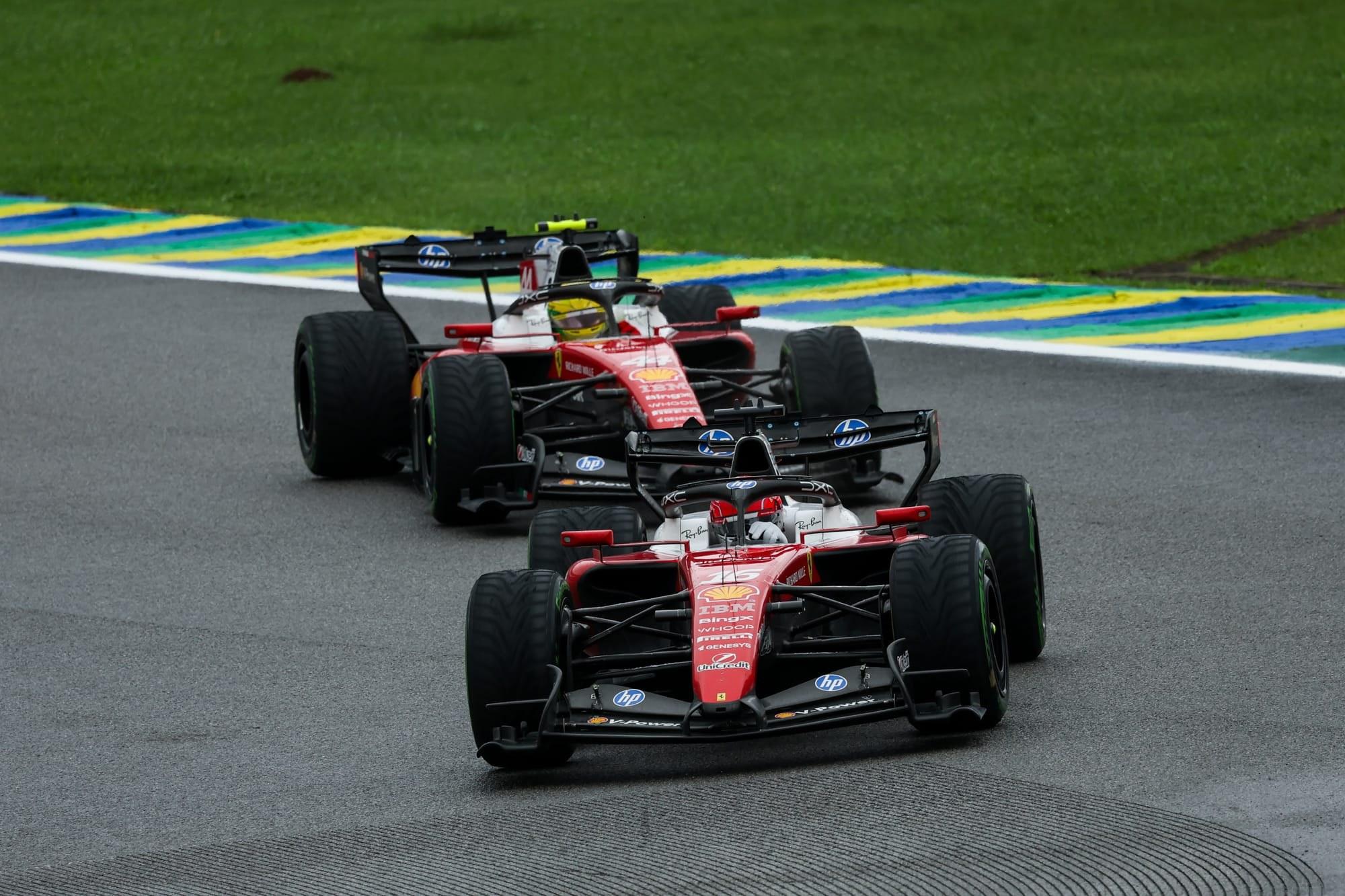
Red Bull weren't alone. Ferrari went the same way with both cars: Hamilton and Leclerc each dropped 10 places for new internal combustion engines, and the team called it planned. After the Friday Ferrari had, with the car struggling on both sides of the garage, it was easy to see why. The team chose to reset rather than stretch it, and taking both penalties on the same weekend gets the pain over in one go. Russell also had a new engine and took a smaller drop, and Perez carried a penalty for changing several power unit parts. Verstappen was never going to be the only one climbing on Sunday.
What matters most to Red Bull, though, is the teams' table. Going into the race they led McLaren by 17 points for third with four races left, and that margin is worth more than another headline recovery. A clean run inside the points protects it. A drive from the back makes the highlights reel, but the table doesn't care how pretty it was, and chasing a repeat win from last is a roll of the dice in standings this tight.
Smoke in Hamilton's cockpit and a Ferrari penalty mostly paid
Ferrari's half of the story started a day earlier, on Saturday morning, when Hamilton's final practice ended with smoke in the cockpit and 25 minutes still to run. He had reported strange vibrations from the engine, the noise wasn't right either, and he came straight back to the pits. That was his morning done, and a lot of practice to lose on the day of qualifying.
The grid penalty was already in the post before any of that happened. Ferrari had gone over the allowance for the internal combustion engine on both cars, which is why he and Leclerc each dropped 10 places. The sport's own website said further power unit changes could follow for Hamilton, and that is where it gets interesting.
Under the rule, going over on an element costs the full penalty, while a repeat engine change adds only five more places. Anything past 15 places puts a driver at the back regardless. So for Hamilton the penalty was mostly paid already, and that is why we would change the lot now rather than nurse a suspect engine through a race weekend. The grid can't punish Ferrari much more than it already has. Nursing the engine instead risks the race itself, and the race is the only thing left to lose.
Red Bull went further still. They were over the limit on engine, turbo and exhaust on Verstappen's car, with each element stacking its own penalty on top, so it added up fast and he started last. Yet he was still fastest in that same final practice, a whisker clear of Andrea Kimi Antonelli. That suggests the car matters more than the grid slot here, and Interlagos history agrees. Hamilton has come from the back at the circuit before, across the Sprint and the Grand Prix, and Verstappen has climbed from deep in the field and from the pit lane. A low slot is survivable, and the penalised cars drop from wherever they qualify anyway.
The session had other casualties. Russell took a penalty of his own for an engine change, Antonelli had a steering wheel problem, and Cadillac gave Perez a fresh Ferrari engine, turbo and MGU-K, so he dropped too.
Ferrari's wider picture made the choice sharper. Motorsport.com reported that the team appear to have found many of the answers they were missing with this car. A car that is finally coming good deserves an engine the team trust, which is another reason not to gamble a race on a doubtful one. Qualifying itself then turned chaotic. Norris took pole ahead of Antonelli and Liam Lawson, and told BBC Sport the session brought some of the wettest conditions he had ever driven in.
Put the weekend together and it is one story told from both sides of a grid penalty, the paying and the recovering. Ferrari took the hit on both cars, Red Bull took theirs where the track forgives it, and Verstappen turned last into second with Hadjar alongside him on the podium. But the man who ran that recovery still thinks McLaren had the faster car, and he can't say why. At the next race, watch the straight fight between Red Bull and McLaren on pace, with four races left and a 17-point margin for third that Red Bull brought into Sunday still to defend.
Sources
- How Verstappen outperformed Red Bull’s simulations in Brazil (opens in a new tab), Formula 1
- How Max Verstappen beat Red Bull's own simulation tools with P2 in Brazil (opens in a new tab), Motorsport.com
- Can Hamilton and Verstappen fight back for F1 Brazilian GP victory? (opens in a new tab), Autosport
- Winners and losers from F1 2026 Brazilian GP qualifying (opens in a new tab), The Race
- 2026 Brazilian Grand Prix grid | Formula 1 (opens in a new tab), RaceFans
- Qualifying conditions borderline - but Norris and Russell hoping for more rain (opens in a new tab), BBC Sport